Every year in September, the world marks the International Day of Awareness of Food Loss and Waste, a United Nations observance calling attention to one of the most urgent and solvable global challenges. Nearly one‑third of all food produced is lost or wasted, even as millions of children go to school hungry. Reducing food waste is an environmental and moral responsibility especially for organizations working directly with vulnerable communities.
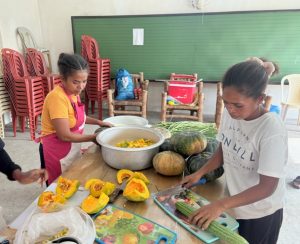
For Thrive, this underscores a commitment we live out daily: delivering nutritious, high‑quality school meals while stewarding every resource entrusted to us. Thrive school kitchens operate with discipline. Waste is actively prevented through thoughtful menu planning and creative reuse of ingredients. These practices ensure that every taka, peso and dollar translates to nutritious meals for children.
Menu Planning: The Backbone of Zero‑Waste Kitchens
Thoughtful menu planning is where Thrive’s experience truly shines.
- Use ingredients across multiple dishes, reducing the chance of spoilage.
- Align with local availability, ensuring freshness and lowering costs.
- Balance nutrition throughout the week, so children get variety and complete nourishment.
- Match cooking capacity, preventing overproduction.
For example, if Monday’s menu includes sautéed vegetables, Tuesday’s dish may incorporate the same ingredients in a soup. This approach ensures that every ingredient has a purpose, and nothing sits unused.
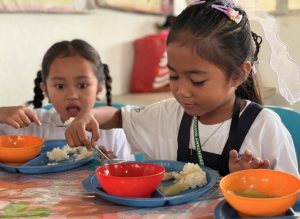
Creative Reuse of Ingredients: The Mom Cooks Advantage
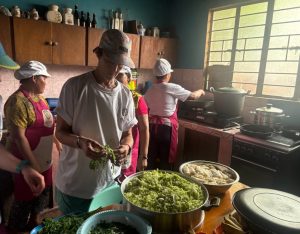
One of the strengths of Thrive’s Mom Cooks model is the creativity and resourcefulness of mothers who prepare meals daily. They bring generations of kitchen wisdom into the school kitchen.
Examples of creative reuse include:
- Turning vegetable trimmings into broth for soups and stews..
- Using leftover rice for nutritious fried rice with vegetables and eggs.
- Transforming excess ingredients into snacks or side dishes for the next day.
This structured creativity guided by Thrive’s nutrition team results in meals that are both nutritious and cost‑efficient, with minimal waste.
Why Waste Minimization Matters for Donors and Communities
Every meal delivered reflects Thrive’s commitment to stewarding donor resources responsibly. Waste minimization ensures:
- More children are fed consistently
- Budgets stretch further
- Local communities benefit from stable, predictable meal programs
- Environmental impact is reduced, especially in remote areas where waste disposal is limited
Thrive’s approach shows that quality nutrition and responsible resource management go hand in hand. When school kitchens operate with care, children thrive and so do the communities around them.